STRUCTURED LIGHT
Paint the scene with dots
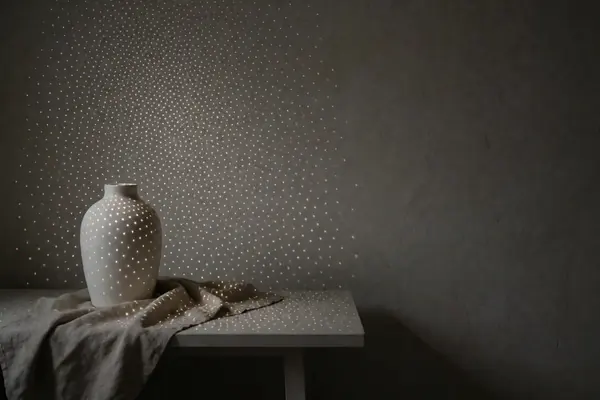
A projector throws a known pattern, often in infrared you cannot see, and a camera works out depth from how the pattern lands on each surface.
Pick a scene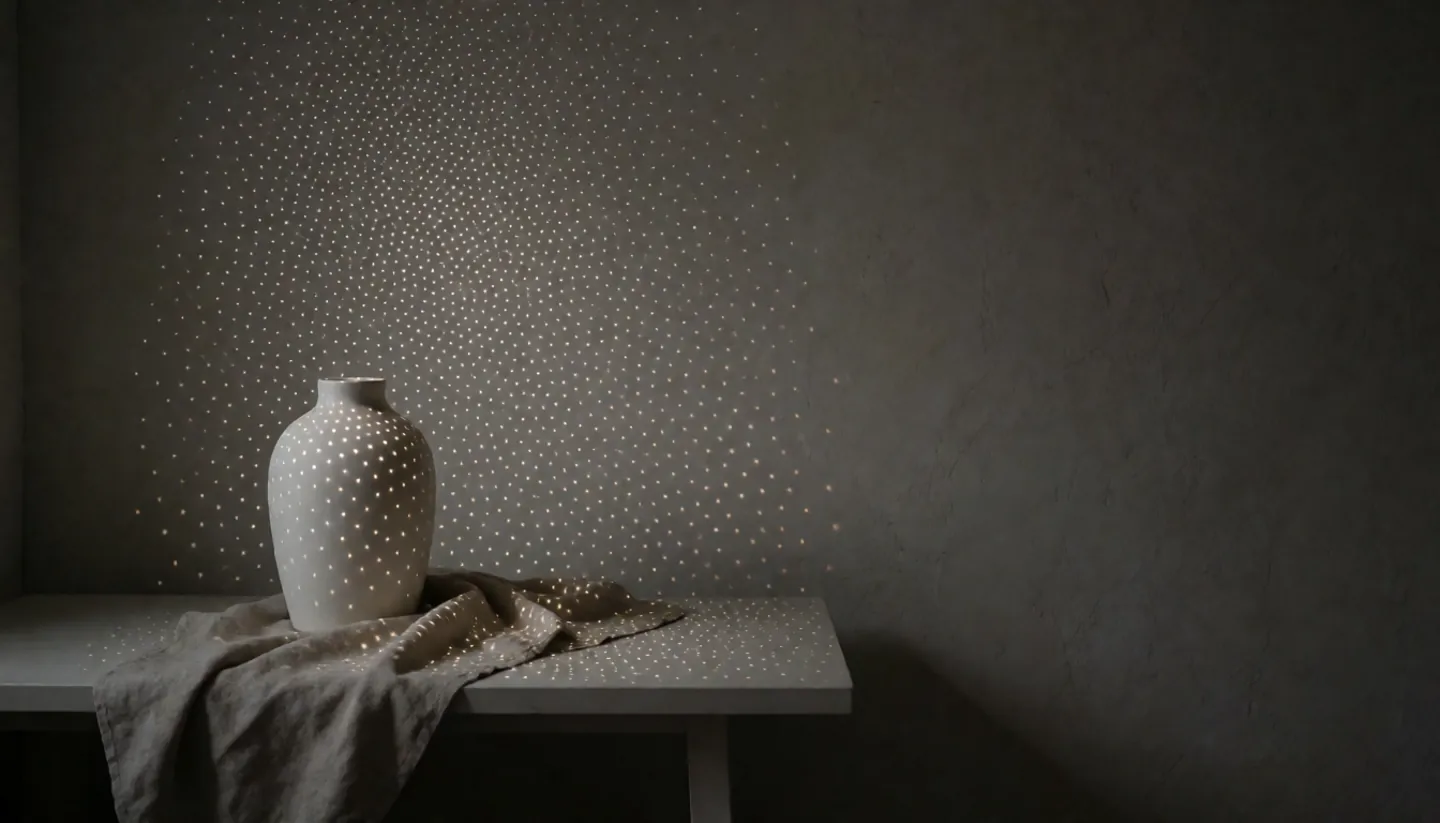
HOW DEPTH CAMERAS WORK
DEPTH in every pixel
AI-generated image, not a photograph of a real person or place.
An ordinary photo is flat.
A depth camera adds a second picture in which every pixel is a distance. Robots, scanners and motion games use it to tell a hand from the wall behind it. There are three main ways to measure that distance, and each has a weak spot.
THE SHORT ANSWER
Depth cameras output a colour image and a depth image.
They differ in how they find the distance.
STRUCTURED LIGHT
A projector throws a known pattern, often in infrared you cannot see, and a camera works out depth from how the pattern lands on each surface.
Pick a sceneSTEREO
Two calibrated cameras find the same point in both pictures and use triangulation. Blank white walls and repeated patterns make that matching hard.
Where each worksTIME OF FLIGHT
The camera sends out near-infrared light and measures how long it takes to come back. Lidar on survey aircraft uses the same idea with laser pulses.
See the numbers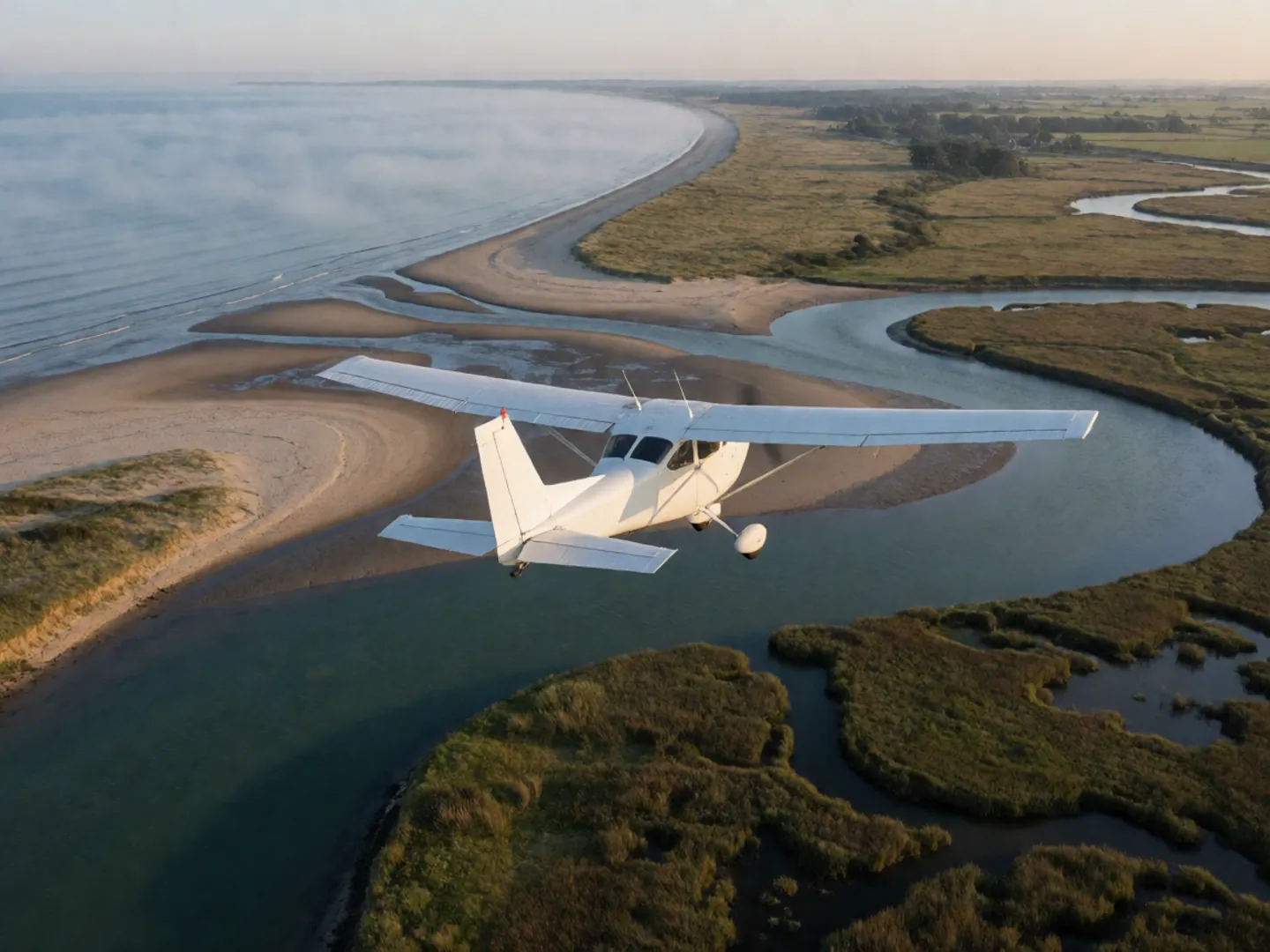
MATCH THE METHOD
No depth camera is best everywhere. The lecture notes point to a simple pattern of strengths.
Two-camera systems do well on busy, detailed scenes and badly on blank or repeating surfaces.
Structured light and time of flight bring their own illumination, so they work on blank walls and at night.
Outdoors, sunlight can be stronger than the camera's own light and wash out the pattern.
For time of flight, light that bounces between surfaces can make a corner look further away than it is.
TWO NUMBERS WORTH KNOWING
Time-of-flight cameras measure how long light takes.
Both figures follow from the exact speed of light.
≈ 30 cm
Distance light travels in one billionth of a second
The speed of light in a vacuum is exactly 299,792,458 metres per second, so in one nanosecond light covers just under 30 centimetres.
SPEED OF LIGHT · NIST
≈ 6.7 ns
Time for light to reach something 1 m away and return
Distance is half the speed of light times the round-trip time. For an object 1 metre away, the light is back in about 6.7 billionths of a second.
ROUND TRIP · 1 METRE
Many time-of-flight cameras do not time single pulses: they send out light whose brightness rises and falls like a wave and measure the phase shift of the returning light, which converts to distance.
A QUICK SCENE CHECK
Pick a scene and a type of camera. The bar shows how well the lecture notes say that method copes.
Based on TU Graz Robot Vision lecture notes on depth sensing (2024). Real cameras vary in how well they handle each case.
FROM ROOMS TO COASTLINES
Lidar, short for light detection and ranging, uses pulses of laser light to measure distances. NOAA flies it on aircraft to map shorelines and build elevation models.
Topographic lidar usually uses a near-infrared laser to map land, while bathymetric lidar uses green light that can pass through water to measure the seafloor and riverbeds. Millions of measured points form a 3D point cloud.
In conversation
A camera that outputs a depth image as well as an ordinary colour image, so that every pixel carries a distance. Depth cameras are especially important in mobile robotics.
Systems that project a pattern usually do it in the infrared, which people cannot see. That also lets them work in the dark.
Passive stereo cameras find depth by matching the same detail in two pictures. A blank wall has no detail to match. Active systems avoid this by projecting their own pattern.
Active ones can struggle, because sunlight can be stronger than the light they project. Stereo cameras with a dot projector fall back to ordinary stereo matching in bright sun.
Both time how long light takes to return. A time-of-flight camera measures a whole grid of pixels at once; airborne lidar scans laser pulses across the ground and builds a point cloud.
Each figure on this page comes from the sources below.
ABOUT THIS NAME
doodlekinect.com is part of the DoodleSale portfolio. It isn't in an auction right now, but you can ask about leasing it.